
Codeless Testing Best Practices: A Complete Guide to Mastery
As businesses continue to embrace a digital-first approach, automated testing is becoming increasingly important to ensure the quality and reliability of products. More explicitly, codeless automated tests are the way to go as a great solution to test applications quickly and easily. We discussed before the perks and benefits of codeless (low-code) automated testing, It allows testers to quickly and efficiently test the application/product and catch bugs before they reach the end-users. However, that’s not always the case! When codeless automated testing is not done the right way, it could show shortcomings in accuracy and test coverage. As we emphasize that codeless automated testing is the right thing to do, that’s not enough to show how amazing it is… because doing the right thing alone is not enough, doing it RIGHT is the key to your testing and quality assurance success.
Let’s say you are on your first steps at this codeless automated testing experience; to be able to get the most out of it with as little fuss as possible, we offer you some perspective points and practical tips on how to masteryour codeless automated tests regardless of your technical background. Before starting your journey, first you need to finish the following checklist:
Goals and motivation awareness: Understand the purpose of your automated tests. Before you begin, make sure you understand why you’re running the tests and what you’re trying to achieve. This will help you create tests that are more effective and efficient.
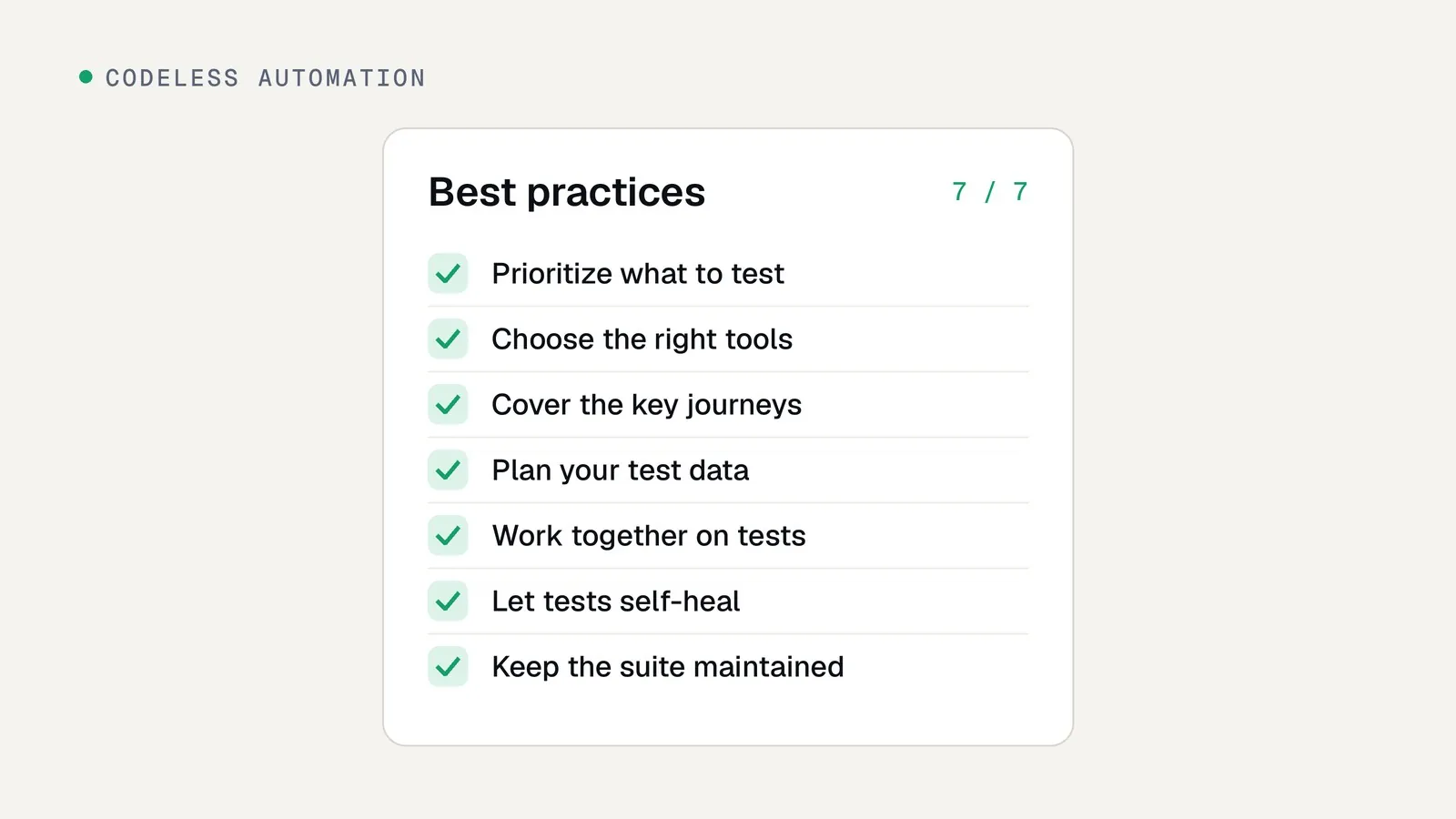
Prioritize Testing: The first step in improving automated tests is to prioritize testing. Automated testing should be integrated into the development process from the beginning. This ensures that bugs are caught early in the development cycle, saving time and resources in the long run. By prioritizing testing, you can also ensure that your testing process is robust and thorough.
Choose the Right Tools: Choosing the right codeless automated testing tools is crucial for improving your testing process. There are many testing tools available, each with its own strengths and weaknesses. It is important to choose a tool that is suitable for your application and team. Factors to consider when choosing a testing tool include cost, ease of use, support, and the ability to integrate with other tools in your development stack.
Write Testable Code: Writing testable code is an important step in improving automated testing. Testable code is code that is easy to test, with clear inputs and outputs. By writing testable code, you can ensure that your automated tests are effective and efficient. Some tips for writing testable code include using meaningful variable names, keeping functions small and focused, and making sure to include unique properties for your application elements as much as possible.
Continuous Integration: Continuous integration is the process of automatically building, testing, and deploying code changes. By integrating automated testing into your continuous integration process, you can catch bugs and issues early on in the development cycle. This ensures that your code is always working as expected, and reduces the risk of bugs being introduced into production.

Test recording phase, using the codeless automated testing tool that you chose, can be easy and enjoyable, but often misleading if the tester did not make the most out of it, and the results of replaying those hastily recorded tests will show undesirable outcomes. However, by following the practical tips below, you can improve your tests and make sure to get the best results you like to achieve.
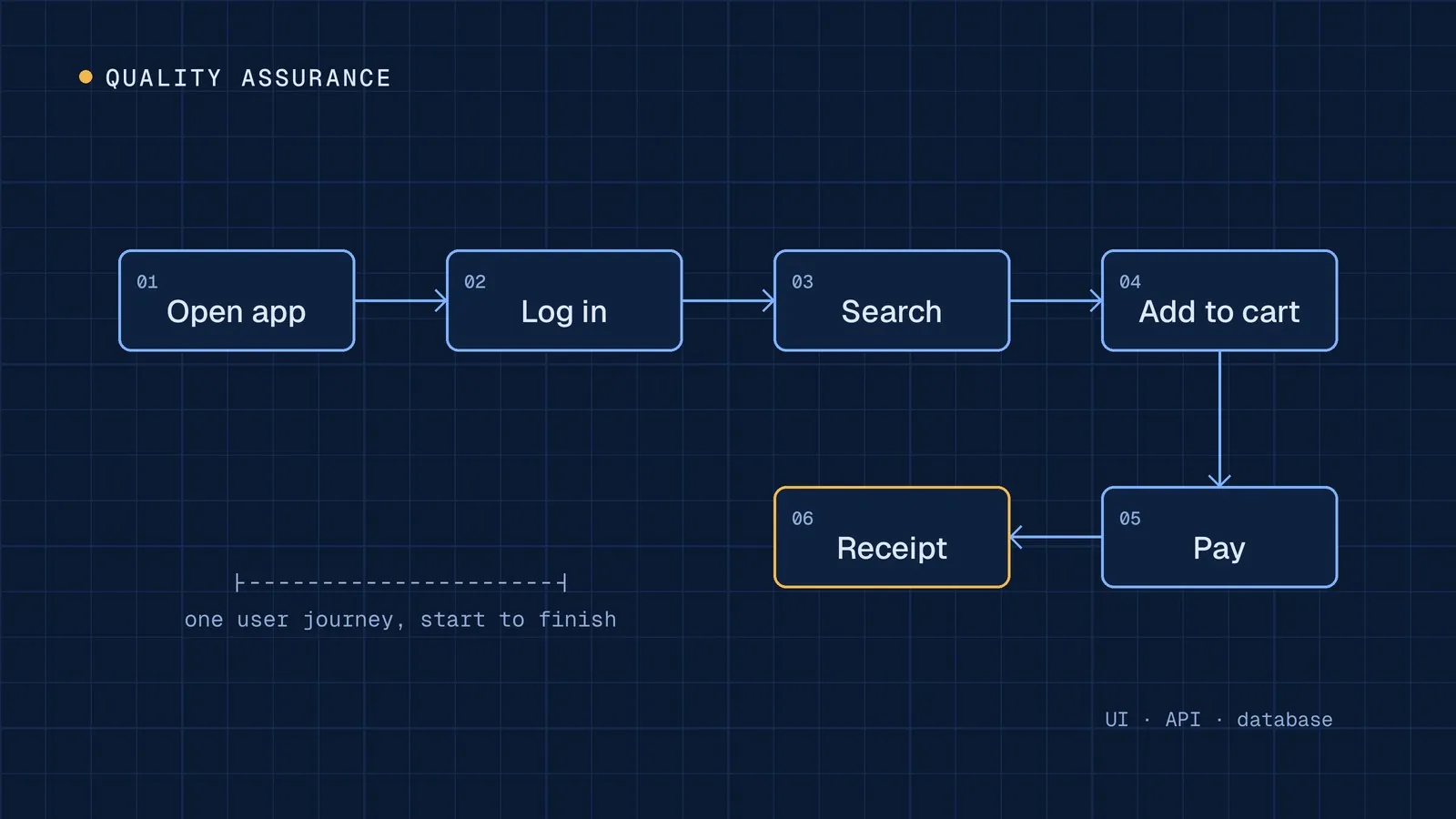
Test Coverage: Ensure that you have comprehensive test coverage that covers all possible scenarios and edge cases. You can start by converting the manual test scenarios to automated ones and find other hidden spots that can be covered by the tools you adopted for test automation.
Test Data: Make sure that your test data is robust and representative of real-world scenarios. Use test data generators to create a wide range of test data that will help identify bugs and issues.
Collaboration: Collaborate with developers, testers, and other stakeholders to ensure that automated tests are developed and executed effectively. Regular communication and collaboration will help identify issues and improve the overall quality of your automated tests.
Verification: Make sure to add assertion steps throughout your test steps as checkup points to assure the test is going in the right direction and showing the right outcomes.
Monitoring: Keep an eye on test results, as it is an important part of improving automated testing. Regularly review test results to identify patterns and trends. This can help you identify areas of your code that may require further testing or optimization. It is also important to review test results after making code changes, to ensure that your changes have not introduced new bugs or issues.
Self-Healing: Make the best out of the self-healing feature that you can get from the codeless testing tool that you chose before. Self-healing feature will provide you with the ability to overcome and eliminate flaky locators.
Maintenance: Regularly maintain and update your automated tests to ensure that they continue to be effective. Refactor and optimize tests as necessary to keep up with changes in the application or technology stack.
In conclusion, codeless automated testing can be a valuable tool for software development teams by taking the time to understand the available options, as well as implementing the necessary steps to ensure your tests are effective and reliable.
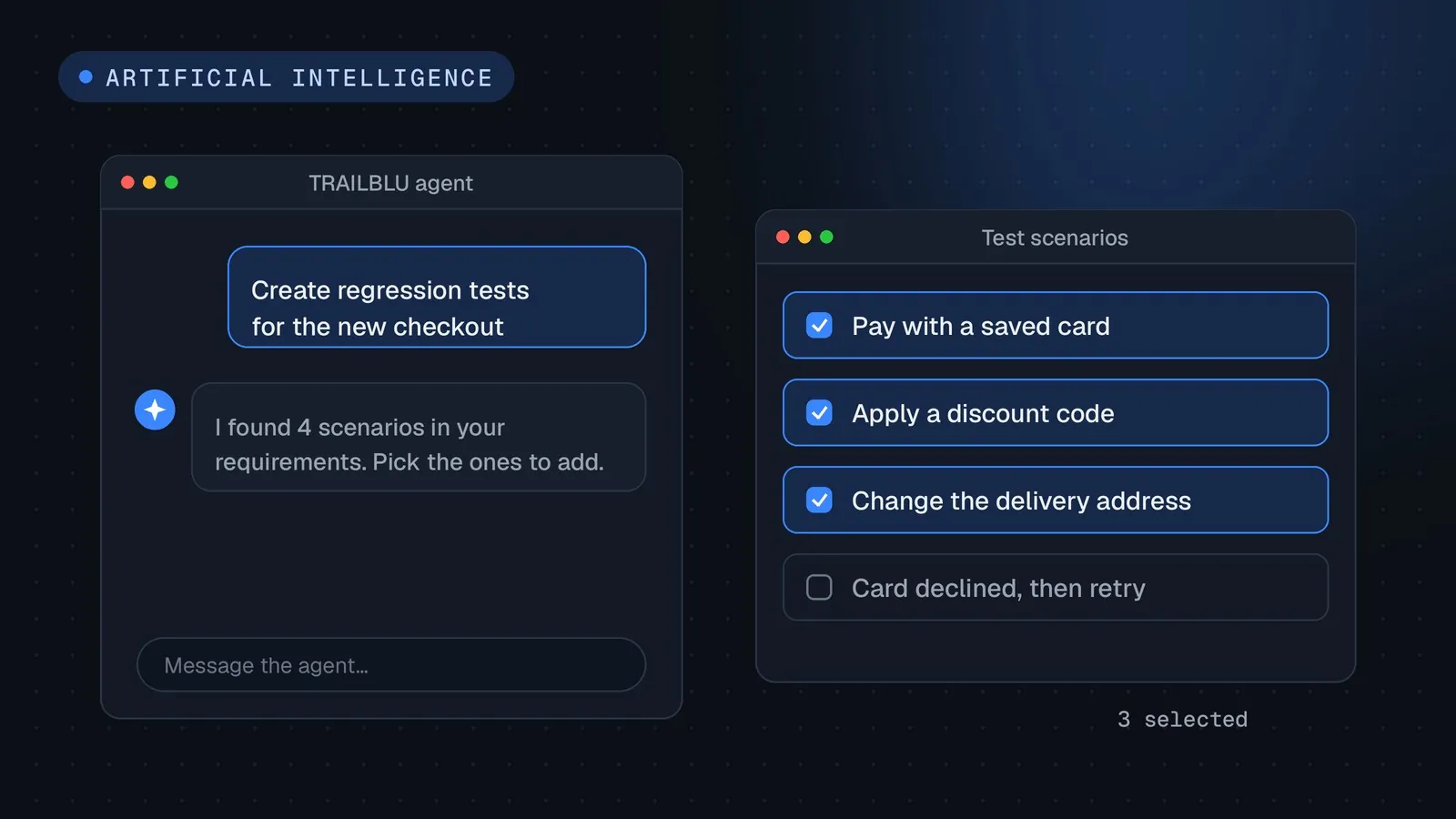
Here, at TRAILBLU, we understand the importance of mastering automated tests, and we have the perfect solution for you. Our codeless automated testing platform helps you quickly and easily create, execute, and manage automated tests with minimal effort. Our platform is designed to help anyone, regardless of their technical background, to improve their automated tests. With TRAILBLU, you can easily create automated tests with no coding required. We also provide detailed test results, so you can quickly identify and fix any issues. Our platform also allows you to easily integrate automated tests with your existing development and deployment pipelines. At TRAILBLU, we believe that codeless automated tests should be easy to use and provide accurate results. With our platform, you can quickly and easily improve your automated tests and ensure the quality of your products.