
Regression Testing
With each new feature or update, there's an increased risk of introducing bugs or errors, making regression testing a critical practice. But what exactly is regression testing, and why is it so crucial?
Understanding Regression Testing
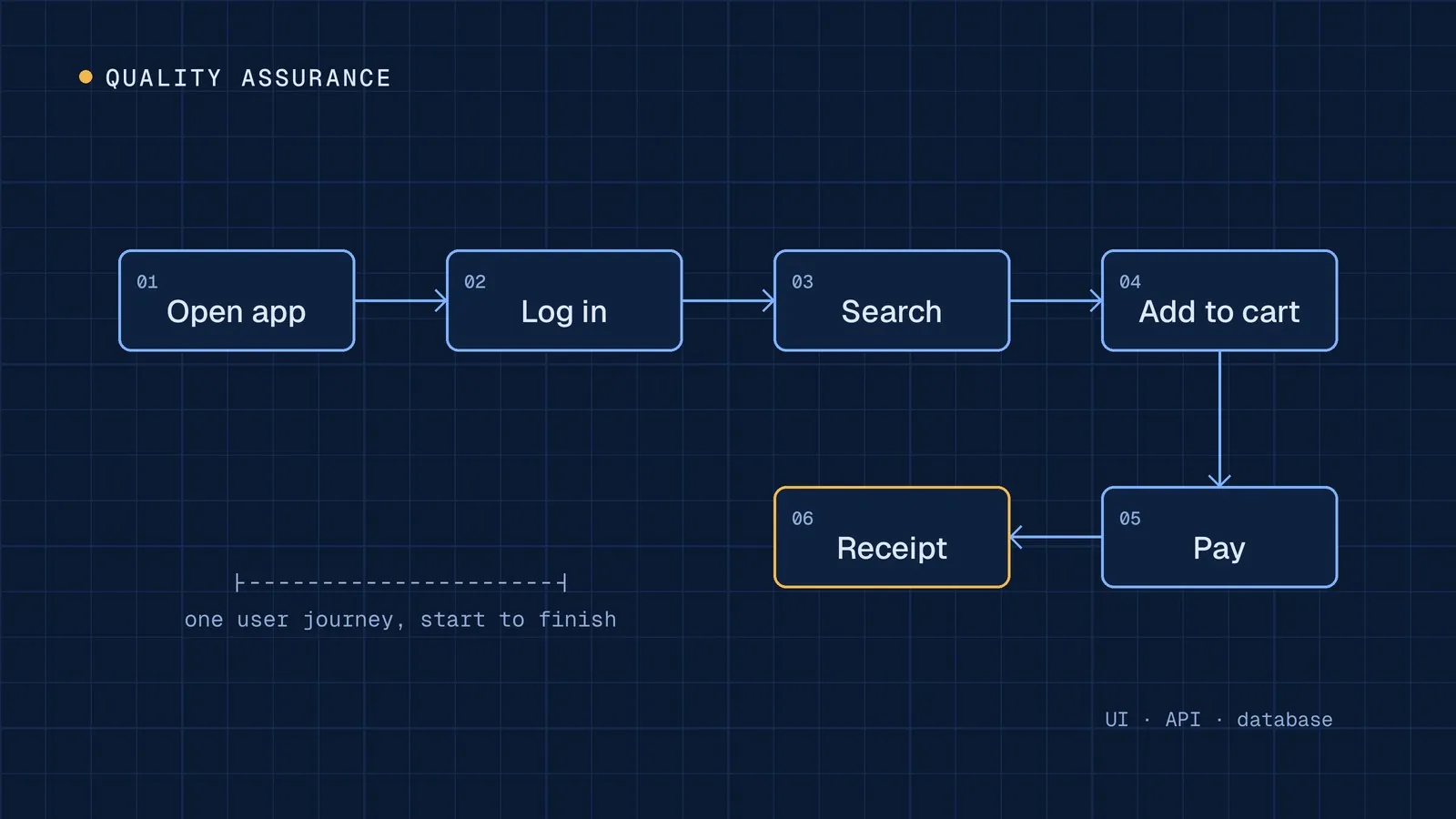
Regression testing is the process of re-running functional and non-functional tests to ensure that recent code changes have not negatively impacted the existing functionality of the software. It’s used to detect unexpected issues that may arise after updates, bug fixes, or new feature implementations. Essentially, regression testing helps to confirm that the application still performs as expected and that no new bugs have been introduced during development.
Benefits of Automated Regression Testing
As applications grow in complexity, the number of test cases required for thorough regression testing increases, often making manual testing impractical. Automated regression testing offers a more efficient, accurate, and scalable solution to address these challenges:
● Efficiency & Speed: Automated regression testing significantly reduces the time required to execute tests, enabling your team to focus on innovation rather than repetitive tasks.
● Accuracy & Consistency: Automation eliminates human error, ensuring tests are executed with precision every time, leading to more reliable results.
● Cost-Effectiveness: Although there is an initial investment in setting up automated tests, the long-term savings are substantial. Catching issues early in the development cycle reduces the need for extensive bug fixes, saving both time and money.
● Scalability: Automated regression testing easily scales to cover a wide range of test cases, ensuring comprehensive testing as your application grows.
● CI/CD Integration: Automated regression testing is crucial in a continuous integration/continuous delivery (CI/CD) environment, ensuring that new code changes don’t introduce regressions and allowing for faster, more reliable releases.
● Reduced Manual Effort: By automating regression tests, your testing team can focus on more complex and exploratory testing tasks, enhancing productivity and fostering innovation.
When Is Regression Testing Complete?
Knowing when to stop regression testing is essential to avoid unnecessary delays in the development cycle. Generally, regression testing is considered complete when: All critical and high-priority test cases have passed. No new bugs have been detected during multiple test cycles. The code changes have been tested across different environments and platforms. The test coverage meets or exceeds the predefined threshold set by your team. However, it's important to recognize that regression testing is a continuous process, especially in an Agile or DevOps environment. New code changes often require re-testing to ensure stability.
Challenges and Limitations of Regression Testing
Despite its importance, regression testing is not without its challenges. Some of the key limitations include:
● High Initial Setup Cost: Implementing automated regression testing requires an upfront investment in tools, infrastructure, and training.
● Maintenance Overhead: Automated tests need regular updates as the application evolves, which can become resource-intensive.
● False Positives/Negatives: Poorly designed test cases can lead to false results, either missing defects or flagging non-existent issues.
● Complexity in Test Management: As the number of automated tests grows, managing and organizing them can become increasingly complex.
TRAILBLU: Your Solution for Advanced Regression Testing
At TRAILBLU, we recognize the complexities involved in maintaining software quality. That’s why we offer a suite of advanced features designed to streamline and enhance your regression testing process:
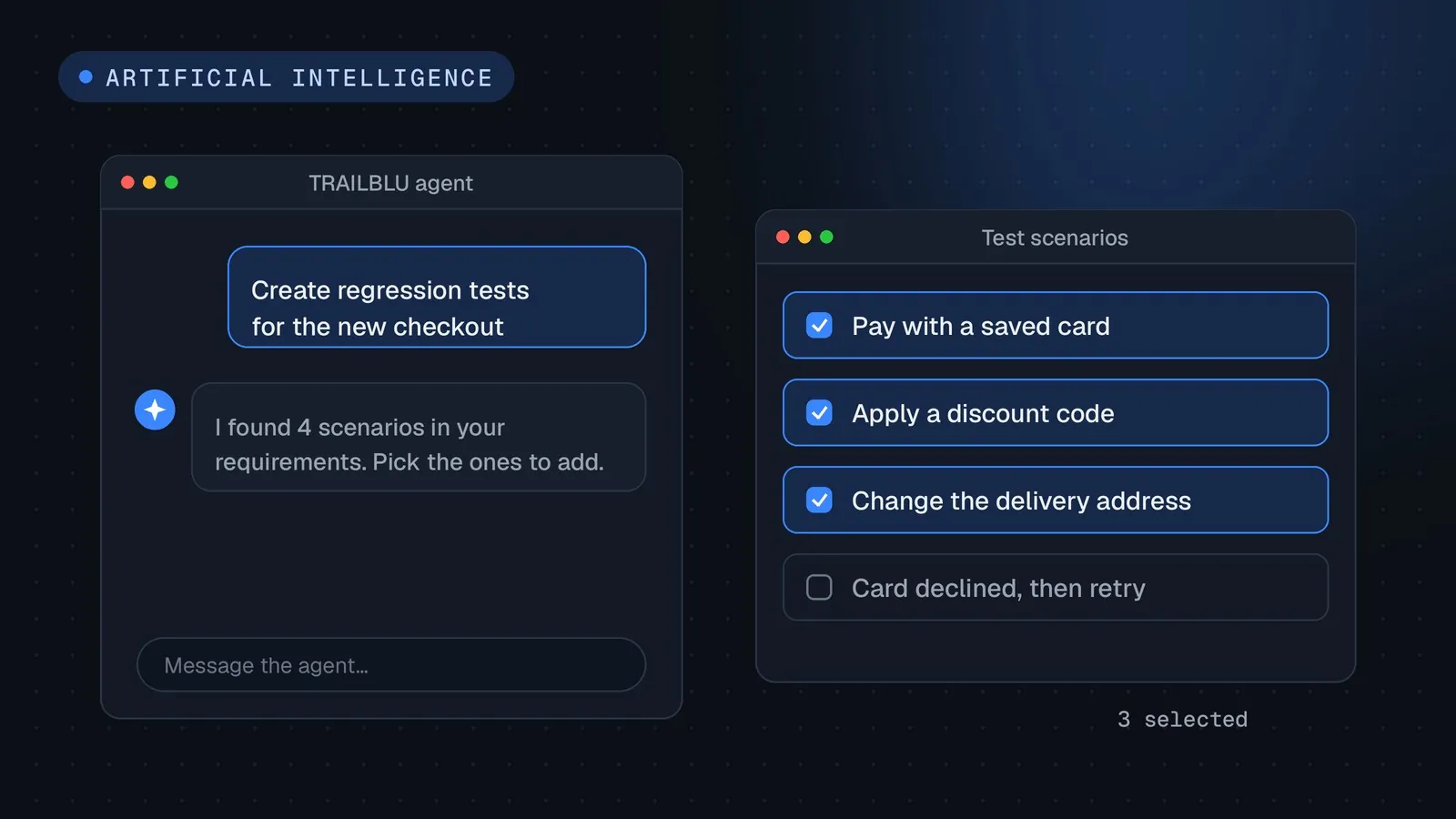
● Generative AI Test Creation: Our platform leverages generative AI to automatically create comprehensive test cases tailored to your application’s unique needs. This significantly reduces the time and effort required to develop test scripts while ensuring high coverage and accuracy.
● AI No-Code Testing: TRAILBLU’s no-code testing solution allows teams without extensive coding knowledge to create and execute automated tests easily. This democratizes the testing process, enabling broader participation across your team.
● AI Visual Testing: Visual testing ensures that your application’s user interface remains consistent across different devices and browsers. TRAILBLU’s AI-driven visual testing automatically detects and flags UI discrepancies, helping you maintain a seamless user experience.
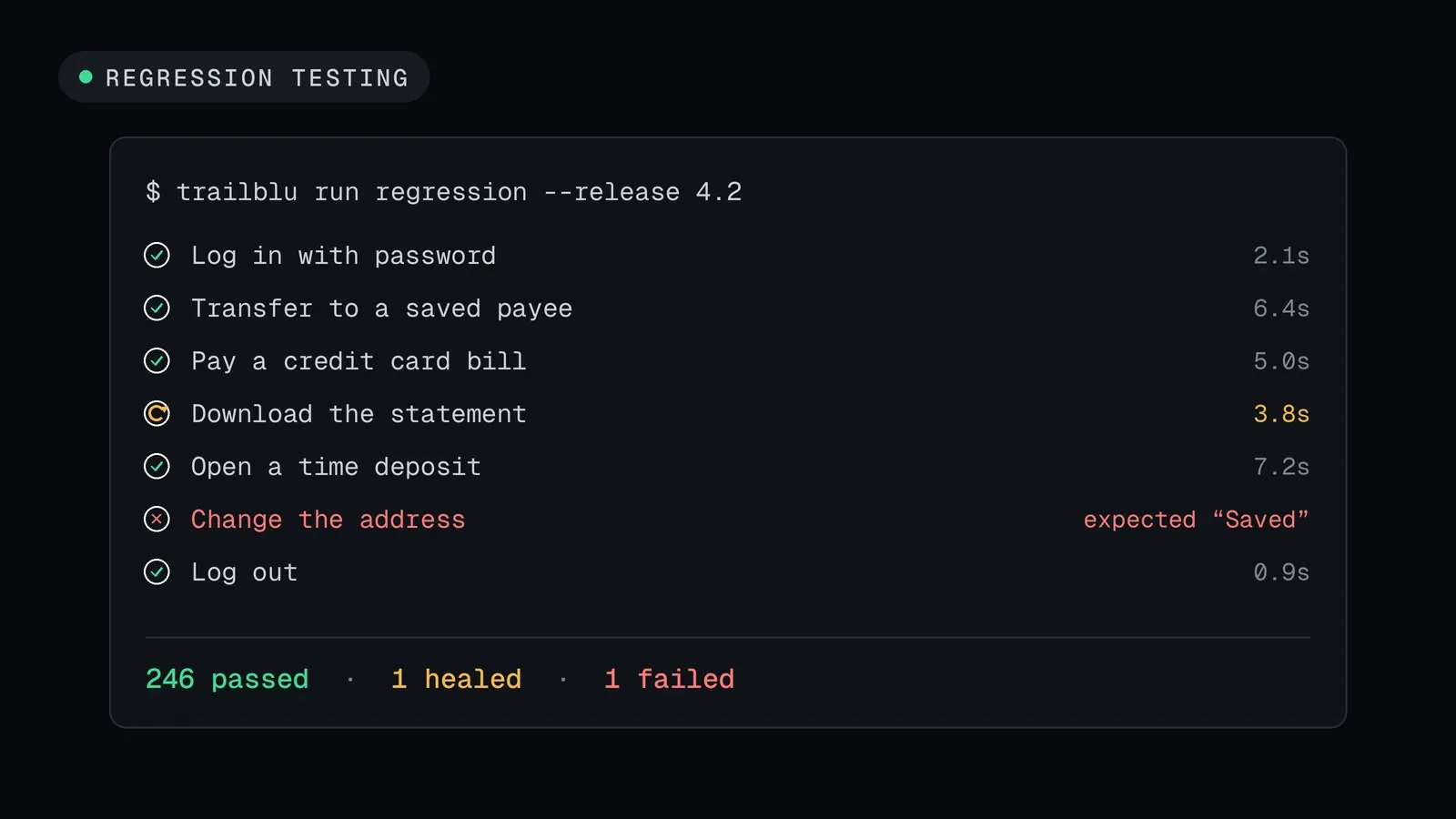
● AI Self-Healing: One of the biggest challenges in automated testing is maintaining test scripts as the application evolves. TRAILBLU’s self-healing feature automatically adjusts and repairs test cases when UI elements change, reducing the need for manual updates and ensuring ongoing reliability.
By incorporating these advanced features, TRAILBLU enables you to achieve a more efficient, accurate, and scalable regression testing process, ultimately delivering a superior product to your users.
Conclusion
In today’s competitive software landscape, automated regression testing is no longer a luxury but a necessity. By leveraging TRAILBLU’s cutting-edge tools and technologies, you can ensure your applications are stable, reliable, and ready to meet the demands of modern users. Ready to take your regression testing to the next level?