
Visual Testing Challenges: A TRAILBLU Solution
Imagine your web application displaying flawlessly on one device but breaking apart on another—an inconsistency that could cost you users and tarnish your brand’s reputation. Visual issues are among the hardest to catch manually, and in today’s digital world, user expectations are higher than ever. Ensuring that every pixel is perfectly in place across all browsers and devices has become a monumental task for developers and testers alike. But where manual efforts fall short, intelligent automation steps in. This is where TRAILBLU's innovative solution excels, tackling the most pressing visual testing challenges with precision and efficiency.
Common Visual Testing Challenges
Cross-Browser and Cross-Device Inconsistencies: According to research, as much as 52% of users access the web from multiple devices, meaning ensuring consistent visual quality across different browsers and devices is critical. These inconsistencies can result in reduced user engagement and potential revenue loss, especially for e-commerce platforms. Browser rendering differences can lead to mismatches in fonts, layouts, and colors, creating usability challenges for developers and testers.
Dynamic Content Testing: Many websites today have dynamic content (e.g., real-time updates, personalized dashboards). Approximately 30% of tests fail due to changes in dynamic content, and dynamic UI updates can make it difficult to predict or capture consistent visual representations. The complexity increases with the need to test across various screen sizes, further multiplying the test cases.
False Positives and Negatives: False positives are a significant issue in automated visual testing. On average, some teams report that 20-30% of flagged issues are false positives due to minor, non-impactful changes in pixels. This wastes time for QA teams, who need to manually verify whether the changes are important or not. Conversely, false negatives—where small but important visual defects go unnoticed—can affect user experience and result in costly post-release fixes.
High Maintenance Efforts: The effort required to maintain visual tests can be staggering, especially as UI components change frequently. Large teams report spending up to 25% of their testing time updating baselines for visual tests. This can slow down the CI/CD pipeline and increase testing times by 20-30%, particularly when working with large-scale applications that undergo frequent UI updates.
These challenges, combined with the rise in the complexity of modern web applications, highlight the importance of using automated solutions to streamline visual testing efforts. By addressing these issues, teams can improve the consistency, reliability, and efficiency of their testing processes, leading to better user experiences.
How TRAILBLU Addresses These Challenges?
At TRAILBLU, we recognize these visual testing pain points and have designed a robust AI solution that automates the process while ensuring precision and scalability.
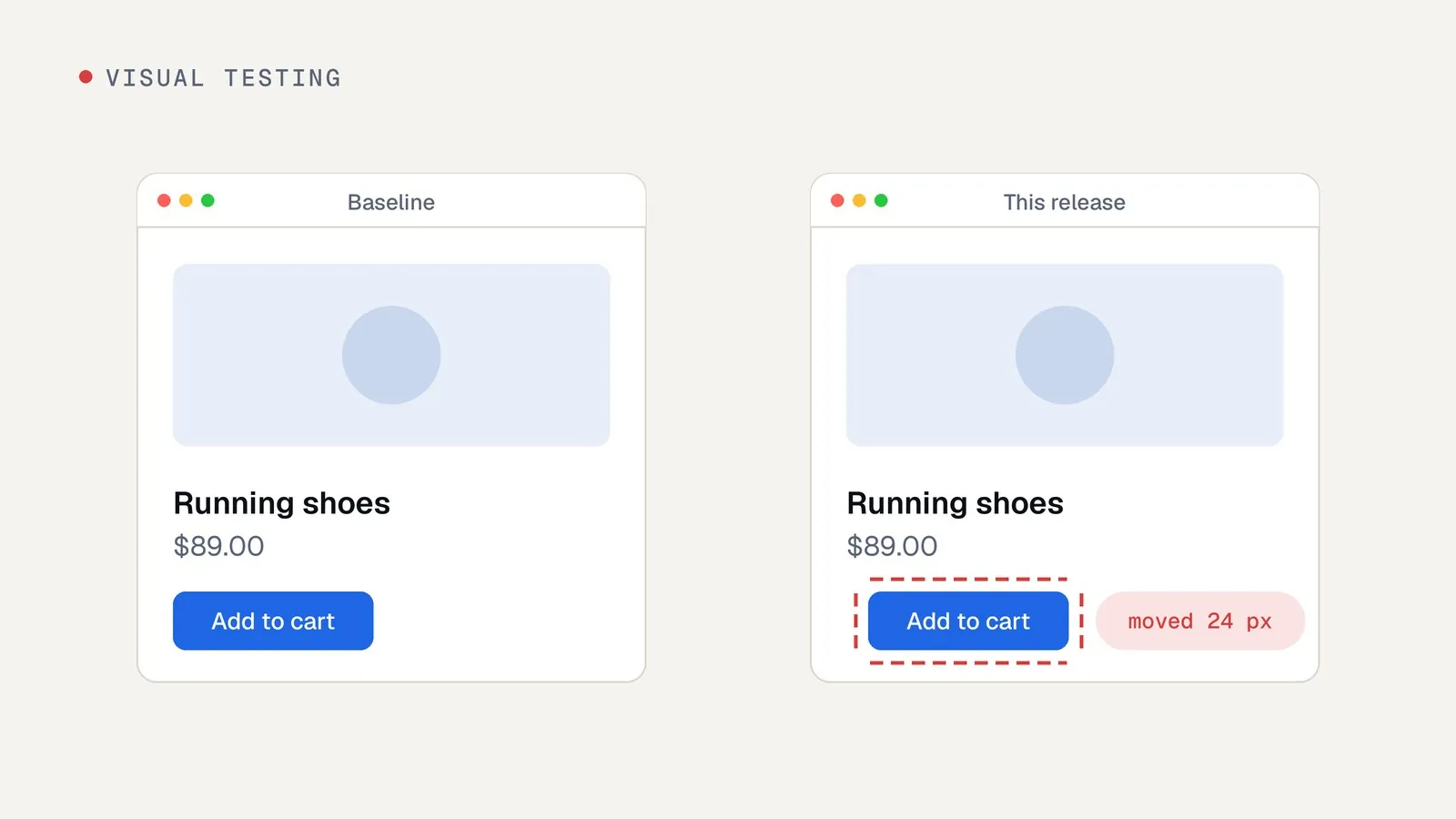
AI-Driven Visual Regression Testing: TRAILBLU employs AI to detect even the most subtle visual differences between releases. Our AI algorithms go beyond mere pixel comparisons, focusing on the actual user experience. This reduces false positives, ensuring that only meaningful changes are flagged, saving testers time and reducing frustration.
Seamless Cross-Browser and Device Testing: With TRAILBLU, testers can automate the process of checking visual consistency across multiple browsers and devices. Our platform integrates with leading browsers and mobile devices, ensuring that your application renders perfectly, no matter the environment.
Dynamic Content Handling: Our solution is tailored to handle dynamic content efficiently. TRAILBLU’s visual testing framework allows testers to define expected behaviors for dynamic elements, reducing the risk of missing any visual discrepancies in content that changes frequently.
Smart Baseline Management: One of the standout features of TRAILBLU’s visual testing solution is its smart baseline management. Our system automatically updates baselines when needed, reducing manual effort while maintaining visual consistency. This is especially useful for teams working on fast-paced development cycles where UI changes are frequent.
Scalability and Parallel Execution: For large teams or enterprises, TRAILBLU offers parallel execution of visual tests, ensuring rapid feedback across all environments. This enables teams to scale their visual testing efforts without compromising on speed or accuracy.
Conclusion
Visual testing is no longer an optional part of the quality assurance process—it’s a necessity. The challenges associated with maintaining visual integrity across browsers and devices are real, but with TRAILBLU’s innovative solution, these challenges become manageable. By automating visual regression testing, reducing false positives, and supporting dynamic content, TRAILBLU empowers development teams to deliver visually flawless applications faster and more efficiently.
Embrace the future of visual testing with TRAILBLU. Transform your UI testing into a seamless, automated process and ensure your application delivers a pixel-perfect experience every time.